The Logistics of Grief

I didn’t set out to write so much about loss and grief. But in conversation, when the subject somehow surfaces, I often notice a moment of quiet recognition in other women - the awareness that, sooner or later, they might find themselves standing where I once stood.

They rarely ask directly. But I can see the question in their eyes:

What if this were me? How would I handle it?

When someone dies, people talk about sadness, memories, and loneliness. What they rarely mention is the administrative shockwave that follows.

Suddenly you find yourself dealing with banks, lawyers, government agencies, utilities, insurance companies, and endless automated phone systems - all while your brain is foggy from loss. Grief is not only emotional. It is also logistical, financial, legal, and bureaucratic.

Here are a few things some people may not be prepared for:

The Administrative Avalanche

After a death, a surprising number of institutions need to be contacted: banks, credit cards, insurance companies, government agencies, pension providers, utilities, subscription services, and professional memberships. Each requires slightly different documentation - usually death certificates, executor information, and formal notification letters. You will spend hours on the phone, on hold.

Accept it.

When your mind is clouded by grief, hiring a service that prepares essential notification letters may be worth every dollar. If that is not an option, there are also many free checklists and guides available online.

Death is Expensive

Funeral costs, a celebration of life, legal fees, accounting work, and probate costs add up quickly. Within weeks, expenses can pile up in ways many people are not prepared for. Maintaining an emergency fund for end-of-life expenses helps.

The Digital Lockout Issue

Modern life runs on passwords and two-factor authentication. If accounts are tied to the deceased person’s phone or email, you may suddenly lose access to banking portals, utilities, subscriptions, cloud storage, and tax records.

Then the holding patterns begin - hours on the phone trying to regain access. A shared additional email account, password manager or a secure list of accounts could save a lot of frustration later.

In your own name

Even in stable partnerships, each person should have one bank account and credit card in their own name. Being an additional cardholder is not the same as being the primary account holder. Access to funds can change quickly after a death.

Choosing an Executor

Being an executor is not a ceremonial role. It can easily involve hundreds of hours of work. Choose someone with integrity, emotional steadiness, and the patience to deal with institutions, paperwork, and the expectations of others involved.

In British Columbia it is strongly recommended to choose a BC resident as executor. Appointing someone from another province can create additional legal and tax complications. An executor living overseas can turn the estate into an international tax matter - something best avoided.

It is also wise to name an alternate executor, in case the first person cannot serve.

Name Your Beneficiaries

Certain financial assets pass outside the will. Life insurance policies, RRSPs, RRIFs, TFSAs, and pensions go directly to the named beneficiary, regardless of what the will says. Naming beneficiaries and reviewing these designations periodically can simplify the estate process and help reduce the assets that need to go through probate.

Probate

Grant of probate does not mean the estate is settled. In British Columbia, an executor must not distribute the estate for 210 days after probate is granted, unless all beneficiaries and potential claimants consent or the court allows it.

Even after that, taxes still need to be settled and a clearance certificate may be required before final distribution. In practice, settling an estate often takes more than a year, sometimes considerably longer.

A letter of wishes

A Letter of Wishes is not a legal document, but it can be incredibly helpful. It is simply a place where you write things down for the people who will have to sort things out later: where important documents are kept, who the key contacts are, what you might want for a funeral or celebration of life, and any guidance that might make the executor’s job easier.

Many people shy away from this because it forces them to think about death. But there is also something quietly reassuring about it. It gives you a little authorship over how things should unfold. Think of it as leaving a small roadmap for those who will be navigating after you are gone.

It is a service to yourself — but even more so to the people you love.

Talk about your wishes

There is a German saying: “Do you still talk to one another, or have you already inherited?”

It sounds humorous, but it contains a serious truth. Estate matters often stir up old family dynamics. The conflict is frequently not about money, but about feeling seen, valued, and appreciated.

My parents were great role models. They discussed their will openly ahead of time, so there were no surprises. Sometimes a simple conversation can prevent a family from drifting apart over questions that were never meant to cause harm.

The hidden work: sorting a lifetime of belongings

One of the most exhausting tasks after a death is not the legal paperwork. It is dealing with the contents of a home. Closets, drawers, cupboards, basements, and storage spaces often contain decades of belongings.

Each item requires a small decision: keep, donate, give away, recycle, discard. One decision is easy. Thousands of decisions made while grieving are not.

Swedish death cleaning

The Scandinavians have a thoughtful concept called Swedish death cleaning (döstädning). Despite the dramatic name, it simply means gradually reducing possessions during life so loved ones are not left sorting through decades of accumulated belongings.

Many people find this surprisingly freeing. Decluttering becomes a quiet act of kindness for the people who will come after us.

Passing meaningful items on while you are alive

Another generous practice is to give meaningful items directly to the people who will appreciate them. Instead of leaving loved ones guessing later, you can simply say:

“I would like you to have this.”

You get to see the joy it brings, and it removes uncertainty later.

A final thought

Most of us hope to leave behind memories, stories, and the imprint of a life well lived. But there is another quiet form of generosity.

It is the effort we make to ensure that when our lives end, the people we love are not left struggling through unnecessary confusion and bureaucracy. A little preparation is simply another way of taking care of each other.

The Float in the River of Grief

How Love Carries Us After Loss

Note: I wrote this reflection for anyone navigating the unfamiliar waters that follow loss. If you are there now, I hope these words bring a small sense of steadiness.

When someone we love dies, grief is like being thrown into a wild river.

The current is strong.
The water is cold.
You are carried further than you ever intended to go.

At first you fight the current.

But deep down you know there is no swimming back.
The river is carrying you somewhere you never intended to go.

And the river keeps moving.

Some mornings you wake up and for a brief moment everything feels normal.
Then the memory returns, and the water rushes in again.

I remember mornings like that after he was gone - the quiet realization that the world had changed overnight and would never quite be the same again.

And slowly, almost surprisingly, you begin to notice something.

You are still afloat.

Because the love you shared did not disappear.

It changed form.

The love you once shared has become the float that keeps you above the water.

Grief is often described as loss.

But that is not the whole truth.

Grief is also the echo of something beautiful.
The quiet trace of a love that was real.

Grief is not the opposite of love.

Grief is love continuing in a different form.

And sometimes, in the quiet after the storm, you begin to sense something else as well -

that love was never meant to disappear.
Only to change the way it travels with us.

The river may still be wild at times.
There may be moments when it feels as if the current will throw you under again.

But something has changed.

You know now that you are not alone in the river.

The love you shared is quietly keeping you above the water.

And slowly, almost without noticing,

you realize

you are still here.

You are alive.
You are safe.

Fine Art Portraits in Italy | Heidi Back

Following the Light

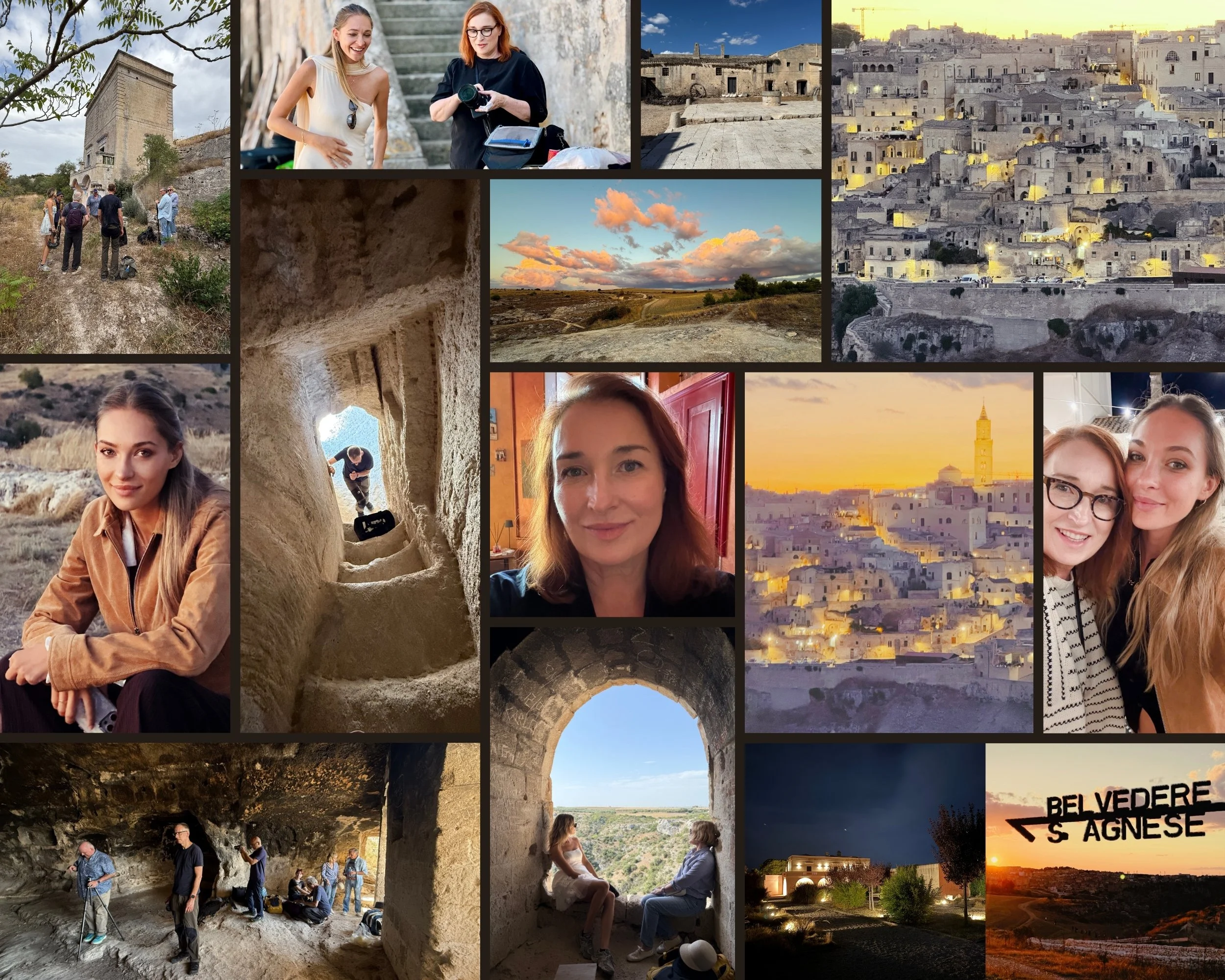
In the fall of 2025, I traveled to Southern Italy to join a photography workshop with Damien Lovegrove, a week fully dedicated to creating beauty.

The locations, historic Masserias and abandoned, timeworn farmhouses, were carefully chosen for their character, light, and atmosphere. But even in an inspiring setting, images do not simply appear. As photographers, we create the conditions and shape the energy that bring an image to life - a process that never stops thrilling me.

Trips like this remind me why I love photography so much: wonderful people, unforgettable places, and the shared joy of creating something meaningful together. And, last but not least — the food. It’s Italy, after all.

Below are a few behind-the-scenes impressions from the adventure.

Behind the scenes

How to Be Again, After Loss — Walking Through the Clearing

A reflection on grief, change, and what it means to find your footing again - because for anyone in a relationship past midlife, the chances of standing in this place are no longer unlikely.

This post is not for everyone. Some will pass by these words, and that is perfectly fine. But for those who are standing - or have stood - where the ground gives way, I offer this quietly. No advice. No resolution. Just a walk alongside.

For those who have known deep loss and the quiet rearranging that follows. For those who understand that, after goodbye, comes not only absence, but the slow, disorienting work of learning how to exist in a world that suddenly feels unfamiliar.

Some may read this and feel uncomfortable. I understand. Loss unsettles everyone - even from afar. It reminds us of how fragile things really are. If this post finds you before your own reckoning, may it take away a little of the fear. It will hurt. But you will survive it. You will find solid ground again.

Grief does not ask us to be noble. It does not care for grace. It arrives, wrecks the furniture, and leaves you sorting through what's still intact. But it also teaches you who you are - and who is truly there.

When the Ground Gives Way

Grief does not speak in words. It speaks in sensations.

The racing of the heart. The shallowness of breath. The sudden emptiness where taste and sound used to be.

You are not broken. You are adjusting to a world that changed without your consent.

And then comes something harsher: the outside world.

One roadblock after another. As though death were a surprise to the very institutions meant to serve the living. Endless hours shouting at phone trees, your sorrow reduced to options and hold music. Screaming into the silence of polite indifference.

Sometimes, tension hums beneath the quiet. Not at life itself, but at the discomfort of being out of sync with a world that moves on while you remain in the stillness of loss. Grief doesn’t follow their tempo. It keeps its own strange rhythm.

And yet, amid the noise and disconnection, something quieter begins to emerge. Grace. Not the kind with halos and clarity. The human kind.

Food and flowers left without expectation. Kind messages arriving out of nowhere. A stranger helping you without asking questions. These gestures do not fix anything. But they land. They hold you upright, even for a moment.

Even in collapse, there is some coherence. Love remains - scattered like pearls across the wreckage. Not gone. Only quieter.

This isn’t the end of the story. It’s where the truth becomes uncomfortably honest.

Sometimes, when the ground gives way, it doesn’t destroy. It clears.

The Second Loss

Some losses are visible. Others arrive quietly.

At first, people show up. They bring words, gestures, food. Some mean it. Some want to mean it. But grief moves slowly. It does not follow social calendars.

As the weeks pass, responses thin out. Some friends grow quiet. Some don’t know what to say. Some are reminded of their own vulnerability and step back. A few lean in intensely, but not always in ways that feel steady or grounding.

Another, quieter absence begins to make itself felt.

Not just the absence of one person - but the absence of resonance. The realization that some relationships were built for lightness, not weight. For shared activity, not shared reality.

It hurts. And it clarifies.

Collect the data.

Who stays present without fixing.
Who does not disappear when things feel awkward.
Who allows things to be as they are, without needing you to be okay.
Who brings calm.
Who brings more noise.

Many people mean well. Some simply don’t know how to be with grief. Modern society has largely privatized grief. What the village once held is now carried quietly behind closed doors. Most of us were never taught how to accompany what cannot be fixed.

Not everyone is meant to sail through the storms with you. Some belong to the lighter waters. Some vessels are simply not equipped for depth.

I have likely disappointed others too. Stayed quiet when words were needed. Stepped back when presence might have mattered. We are all learning, imperfectly, how to stand beside what cannot be solved.

Letting certain expectations fall away is not bitterness. It is a clearing.

In the space that opens, something more precise can grow. Connections that do not require performance. Relationships that can hold depth.

Let what cannot hold, fall away.

What remains holds. And more will come that can hold too.

The Grace of Boundaries

Loss sharpens the view.

What stays becomes sacred. What falls away begins to make sense.

Boundaries are not walls. They are filters. And not everyone is meant to pass through.

There is no more space for those whose effort and presence quietly fade. My energy is no longer theirs to draw upon. I let them go.

I no longer explain my quiet. I no longer soften truth for comfort.

I don’t reject. I just choose peace. What belongs stays. What doesn’t, already knows.

There’s grace in endings. And even more in the kind of beginning that doesn’t have to announce itself.

Clearing the Way Back to Yourself

Becoming doesn’t arrive with fireworks. It comes in small choices. In silence. In pauses.

The world rushes. I do not.

I wake slowly. I leave space. I no longer explain stillness. I no longer please for the sake of being accepted.

Grief still walks beside me. But it no longer leads. It’s quieter now. Familiar.

And in the space that’s left behind, life continues. Not loudly. But fully.

I am not who I was. But I am not lost.

I am here. Quieter. Stronger. A little more certain of what matters - and what does not.

This is not about healing. It’s about becoming.

And so I continue— Not because I am ready. Not because everything is fixed.

But because life continues.

And I do, too. One breath. One step. One honest moment at a time.

Resilience, Rewritten — The Strength You Carry Forward

Resilience is not stoicism or strength on display. It is not a neat arc or a triumphant return. It is slower. Messier. Often invisible.

Sometimes it looks like making the tea even though it tastes like nothing. Other times it looks like setting a boundary where none existed before. And sometimes, it means letting the tears come when they come, without rushing to explain them away.

Still, something shifts. A quiet knowing begins to settle in — that even without having it all together, you can still move forward.

What I have learned is that you do not have to be brave all the time. You just have to be honest. With yourself. With what you need. With what no longer works.

The rituals that helped me were not always grand. They were quiet and often unphotogenic. Tea. Walking. Writing. Moving even when my body wouldn’t want to. Sitting still when my mind couldn’t. Letting grief take up space without making it feel like a failure.

Some days, you carry more than you think you can. Other days, you drop it all and let yourself rest. Both are strong.

You do not have to fix everything. You just have to stay with yourself.

And little by little, you will.

Not because you forced it. But because something inside you — the part that still hopes, still dreams — knows that life, even after everything, is still worth showing up for.

You are not becoming someone new. You are simply discovering more of who you already are.

Finding Light in Loss — What Grief Leaves Behind

Nothing prepares you for grief. It arrives with a force that feels almost impersonal - like a natural disaster - and yet it touches everything personal. You go from holding someone’s hand to holding memories. And no matter how old you are, no matter how much you think you understand impermanence, it knocks the wind out of you.

When you are in your 40s, 50s, or beyond, grief lands differently. Time begins to look shorter. The losses feel closer to home - not just emotionally, but existentially. You start to see how fragile everything is. And yet, somehow, you keep going.

In the beginning, you do what you have to. You take care of the paperwork. You answer the condolences. You try to remember to eat. But then comes the part no one tells you about: the long, quiet stretch where nothing makes sense, and the world keeps spinning as though yours did not fall apart.

What helped me - quietly, without fixing anything - were the photographs. A smile caught mid-laugh. A look across the table. Not posed, not planned. Just proof that we were here. That we loved. That something mattered.

That is what photography can offer: not closure, but connection. A way to keep close what should never be entirely gone.

Grief does not get wrapped up. It softens. It becomes part of your rhythm. And over time, you begin to rebuild - not into the person you were, but into someone who now knows what it means to lose. And live anyway.

There is no right way. But there is your way. And it begins with allowing yourself to be where you are, without apology or explanation.

Navigating Life’s Evolution: Embracing Vulnerability in Your 40s, 50s, and Beyond

Life in our forties, fifties, and beyond brings change—sometimes quietly, sometimes all at once.

Our bodies change.
Our roles in families shift.
Children grow up. Parents grow older. Relationships evolve.

And somewhere in the middle of it all, we may begin to ask ourselves a simple but unsettling question:

Who am I now?

There are moments when we feel less visible than we once were. Less certain. Less defined by the roles that used to shape our lives.

It can be tempting to resist these changes, to hold on to the version of ourselves we once knew.

But something surprising can happen when we stop resisting.

When we allow ourselves to be vulnerable—honest about where we are in life right now—we often discover a different kind of strength.

The changes we feared begin to reveal something deeper.

A clearer understanding of what matters.
A quieter confidence in who we are becoming.

Accepting change does not mean giving up who we were.
It means allowing ourselves to grow into who we are now.

And when we release outdated expectations, something unexpected opens up.

Space.

Space for authenticity.
For new purpose.
For joy that feels more genuine because it is no longer tied to who we thought we had to be.

Life after forty is not a fading.

It is a gradual unveiling of the person we have been becoming all along.

Letting Go of Expectations

Many women carry invisible layers of expectations.

Some come from society.
Some from family.
And some from the quiet but persistent voice of our own inner critic.

Over time, these expectations can feel like a treadmill—always moving, always asking for more approval, more achievement, more proof that we are enough.

Stepping off that treadmill can be deeply liberating.

But it is not always easy.

Letting go rarely happens all at once. More often, it begins with small moments of reflection and quiet courage.

Here are a few places where that journey can begin.

Reflect on What Truly Matters
Take time to consider what genuinely matters to you. What values guide your life? What activities or relationships make you feel most alive? When we reconnect with what brings us real meaning, the expectations of others begin to lose their grip.

Question the Rules You Were Given
Many of our ideas about success, beauty, and worth were shaped long before we had the chance to question them. Recognizing this can be freeing. You are allowed to define these things for yourself.

Set Gentle but Clear Boundaries
Protecting your time, energy, and well-being sometimes requires saying no. Boundaries are not rejection; they are a form of self-respect.

Practice Self-Compassion
Letting go of old expectations is a process. There will be moments of doubt and uncertainty along the way. Meeting those moments with kindness toward yourself makes the journey far more sustainable.

Notice the Progress
Every step away from outdated expectations is a step toward greater authenticity. Acknowledge those moments. They deserve to be seen.

Capture the Moment
Sometimes a portrait becomes a beautiful marker along that journey—a way of honoring who you are right now and celebrating the person you are becoming.

Seeking Less, Finding More: The Art of Simplifying Life

Do you ever long for a simpler life?

In a world that often celebrates accumulation—more possessions, more achievements, more connections—it can sometimes feel as though life itself becomes crowded.

The more we gather, the more we are asked to maintain, manage, and carry.

And quietly, somewhere in the background, a question begins to emerge:

What truly matters?

For many people, the answer begins with a simple realization.

Less can be more.

Not less meaning emptiness, but less noise.
Less distraction.
Less of what does not truly nourish us.

When we begin to remove what is unnecessary, something interesting happens. Space appears—both around us and within us.

Letting Go

One practical place to begin is our physical environment.

Many traditions—from Feng Shui to modern approaches to decluttering—recognize that the spaces we live in influence how we feel. When our surroundings become simpler and more intentional, they often bring a sense of calm and clarity.

Letting go of excess is rarely just about objects.
It is about releasing the quiet weight of things we no longer need.

And with every small act of letting go, life becomes a little lighter.

Creating Space

When the noise begins to fade, it becomes easier to notice what truly enriches our lives.

Perhaps it is time spent with people who share our values.
A walk in nature.
A good book.
Music that moves us.

Simple moments that invite us to slow down and be present.

Psychologists sometimes call this state flow—the experience of being so absorbed in something meaningful that time seems to disappear.

For me, photography often creates that feeling.
Behind the camera, I become fully present. The noise quiets. And for a moment, life feels beautifully simple.

Simplifying life does not mean withdrawing from the world.

It means choosing more carefully what we allow into it.

And sometimes, by seeking less,

we discover

we already have more than enough.

Rediscovering Yourself: The Quiet Power of Aging

In our forties, fifties, and beyond, life begins to ask different questions of us.

The pace of earlier decades slows just enough for us to notice things we once rushed past. Roles shift. Priorities change. The expectations we once carried so carefully begin to feel heavier than they used to.

And somewhere along the way, a quieter question appears:

Who am I now?

For many people, this stage of life becomes less about proving ourselves and more about rediscovering ourselves.

Aging is often described as decline.

But another way of seeing it begins to emerge with time.

It is also a process of refinement.

Over the years we gather experience—joys, disappointments, mistakes, lessons learned the hard way. Slowly, these experiences shape us. They soften some parts of us and strengthen others.

What once felt urgent may no longer seem quite as important.

And what truly matters begins to stand out more clearly.

The physical and emotional changes that come with these years can sometimes feel unsettling. Bodies change. Hormones shift. Emotions rise and fall in unfamiliar ways.

But these changes can also invite a deeper kind of self-acceptance.

Instead of fighting every sign of change, we may begin to listen more closely to ourselves.

We learn what gives us energy.
What drains it.
What feels authentic—and what no longer does.

With time comes a quiet freedom.

The freedom to let go of expectations that no longer fit.
The freedom to choose how we spend our energy.
The freedom to define beauty, success, and meaning for ourselves.

And perhaps most importantly, the freedom to become more fully who we already are.

Aging does not take away who we are.

In many ways, it reveals us.

And if we allow it, this stage of life can become not an ending, but a beginning—a deeper unfolding of strength, wisdom, and authenticity.

Meaningful Portraits: Finding a Photographer Who 'Sees' You

For many women, the idea of having their portrait taken can feel a little intimidating.

Where do you begin?
Who can you trust?
And how do you relax in front of a camera?

The journey toward a meaningful portrait often begins with a simple step: finding a photographer whose work speaks to you.

When you look at someone’s portfolio and feel something—when the images seem honest, calm, and real—you are already on the right path.

A good photographer brings technical skill.

A great photographer brings something more.

She creates an atmosphere where you can feel comfortable, safe, and unhurried. An environment where you do not have to perform or pretend.

As a female photographer, I understand that many women carry complicated feelings about being photographed. My goal is to create a space where you can simply be yourself - without pressure, without judgment.

Every woman arrives with her own story.

Your portrait should reflect that.

Taking time to understand what matters to you—how you see yourself, and how you wish to be seen—allows a portrait to become something more than a photograph. It becomes a reflection of a moment in your life.

For people who are not used to being in front of a camera, the experience can feel unfamiliar at first.

But something interesting often happens when trust begins to grow.

The tension fades.
The conversation flows.
You forget about the camera.

And in those quiet moments, the most meaningful images appear.

Choosing the right photographer is not only about style or technical skill.

It is about connection.

When you feel seen and understood, the portrait becomes something more than an image.

It becomes a way of honouring who you are.

Beautiful Portraits: A Reflection of How You Want to Be Seen

A portrait does not need to reduce you to a moment of vulnerability, nor should it attempt to summarize the complexity of who you are.

It can simply reflect the version of yourself you choose to express—to yourself, to others, or perhaps even in ways you are still discovering.

In my work, I try to create a space where you feel safe enough to decide that for yourself.

This is your story, after all.

My job is simply to help you tell it in a way that feels authentic.

What do you want the world to see?

More importantly, what do you want to see when you look at yourself?

For many women in their forties and fifties, this process can be surprisingly powerful.

By this stage of life, we have absorbed decades of expectations—about how we should look, how we should behave, and how we should age.

In front of the camera, those expectations can quietly fall away.

For a moment, there is space to write a new narrative.

Not one defined by someone else’s standards of beauty or significance, but one that reflects how you truly feel at this stage of your life.

And here is something important:

You do not need to take yourself too seriously.

Embrace your quirks.
Your body.
Your wonderful contradictions.

Let go of the image that may have been imposed on you—by upbringing, culture, or unrealistic expectations.

Sometimes the most meaningful portraits appear when you allow yourself to be seen with a little more freedom.

As a photographer, I am simply there to support that expression.

It may be subtle.
It may be bold.
It may be joyful or quiet.

Each person contains many versions of themselves, and there is no single “correct” way to present who you are.

The magic happens when you feel free to step into the version of yourself you wish to see reflected back.

A portrait is not about uncovering some hidden essence.

It is about honouring how you choose to express yourself.

And that, to me, is something truly beautiful.

Fashion, Fine Art, and the Portrait: Where Style Becomes Story

Fashion is more than clothing.

It is a form of expression—a visual language that quietly communicates who we are and how we wish to be seen.

The garments we choose, the textures we wear, the way fabric moves around the body all carry meaning. When fashion enters the world of portrait photography, it becomes something more than style. It becomes part of the story.

And when that story meets the sensibility of fine art, portraits can take on an entirely new dimension.

Fashion as Narrative

In portrait photography, clothing shapes the mood of an image.

The cut of a jacket, the softness of silk, the drama of a sculptural sleeve—each element contributes to the atmosphere of the photograph. Fashion can introduce elegance, playfulness, strength, or quiet confidence.

When I incorporate fashion into portrait sessions, the goal is not simply to dress someone beautifully. It is to create a visual narrative that reflects the subject’s personality and presence.

The garments become part of the conversation between the photographer, the subject, and the image itself.

When Fashion Meets Fine Art

Fine art brings another layer to this process.

It invites attention to light, composition, texture, and atmosphere—the subtle elements that transform a photograph into something more timeless.

A shaft of soft light.
A carefully balanced composition.
A quiet moment of stillness.

These are the elements that allow an image to move beyond documentation and into something more expressive.

Drawing inspiration from painting, sculpture, and classical portraiture allows me to create images that feel both contemporary and enduring.

A Creative Collaboration

This approach also opens exciting possibilities for collaboration with fashion designers and labels.

When garments are placed within a fine-art portrait setting, they take on a new presence. They are not simply displayed—they are lived in, animated by the personality of the person wearing them.

For designers, this offers an opportunity to see their work in a more intimate and narrative context. For the subject, it becomes a chance to explore identity and expression through style.

At its heart, the intersection of fashion and fine art is about creativity and storytelling.

When these worlds meet, a portrait can become more than an image.

It becomes a collaboration.

A moment of expression.

And sometimes, a small work of art that reflects the many layers of the person in front of the camera.

Preparing Your Makeup for a Photo Shoot

When preparing for a photo shoot, I always recommend working with a professional makeup artist if possible.

Their role is not to transform you into someone else. It is simply to enhance your natural features so you look like the most radiant version of yourself. Professional makeup artists are often the quiet heroes of a photo session, working behind the scenes to ensure everything looks polished and natural in front of the camera.

Of course, I also understand that time or budget sometimes makes a do-it-yourself approach the better option. If you plan to do your own makeup, a few simple steps can help you achieve a natural, camera-friendly look.

Start with a Fresh Canvas

Begin with clean, well-moisturized skin. Hydrated skin always photographs better, as makeup blends more smoothly and evenly. If you normally wear sunscreen, apply it as part of your routine.

Create a Smooth Base

A light primer can help your makeup stay in place throughout the session. If you don’t have a primer, a simple moisturizer can also work well.

Keep Your Foundation Light

Choose a foundation or BB cream that matches your skin tone closely. Apply it sparingly and blend well. For portraits, a natural look is almost always the most flattering.

Conceal Gently

A small amount of concealer under the eyes, around the nose, or on blemishes can brighten the face and even out the complexion. Blend carefully to avoid visible edges.

Add a Touch of Color

A little blush brings life to the face and photographs beautifully. If you enjoy using bronzer, a light sweep along the cheekbones and temples can add warmth and subtle definition.

Keep Eye Makeup Soft

Neutral tones—such as soft browns, taupes, or gentle pinks—tend to photograph best. A slightly darker shade in the crease adds depth while still keeping the overall look natural.

Define the Lashes

A few coats of mascara help open the eyes and make them stand out in photographs. Curling your lashes beforehand can give them a natural lift.

Shape the Brows

Lightly filling in your brows can frame the face beautifully. Use a pencil or powder close to your natural hair color and blend gently for a soft effect.

Choose a Natural Lip Color

A soft pink, nude lipstick, or tinted balm adds just enough color without drawing attention away from your expression.

Optional: Set the Look

If you have a setting spray, a light mist can help everything stay fresh throughout the session.

Makeup for a portrait session should never feel heavy or theatrical. The goal is simply to help you feel comfortable, confident, and like yourself.

When you feel good in your own skin, that confidence naturally appears in your photographs—and that is what truly makes a portrait shine.

When Wanting Beautiful Photos Meets Camera Shyness

There is often a gap between wanting beautiful photographs of yourself and actually feeling ready to step in front of the camera.

It is a bit like preparing for a grand night out. You are excited about the party, but suddenly you feel as if you have nothing to wear.

Why does the thought of being photographed make so many of us uneasy?

You have navigated life’s challenges, celebrated victories, and mastered practical skills like parallel parking or packing a week’s worth of clothes into a carry-on. Yet when it comes to stepping in front of a camera, confidence can shrink surprisingly quickly. Suddenly, everything else seems more urgent than booking a session for yourself.

Why the Camera Feels So Intimidating

Often the hesitation runs deeper than we realize.

It is not simply about photographs. It is about how we see ourselves.

Over time, many of us internalize narrow ideas about beauty and youth—ideas shaped by media, culture, and sometimes even by the people closest to us. Under those expectations, the camera can start to feel less like a creative tool and more like a harsh judge.

And as the years pass, we may become more aware of the subtle changes in our appearance. Facing a camera can feel like confronting those changes all at once.

A Different Way of Seeing

But beauty was never meant to fit into a narrow mold.

True beauty comes from embracing who you are at this moment in your life. Every stage carries its own strength, character, and story.

When we shift our focus from external expectations to self-acceptance, something changes.

The camera stops being an adversary.

It becomes a witness.

A way of honoring the woman you have become.

Owning the Story

Aging is not something to hide from.

It is something to own.

Beauty is not about chasing youth—it is about embracing the person you have grown into. It lives in the stories you carry, the wisdom you share, and the confidence you radiate.

And let’s be honest: confidence looks better on you than any outfit ever could.

Portraits Without Perfection

In a world full of filters and heavy editing, it is easy to forget that authenticity is what truly makes someone glow.

That does not mean a portrait must show every wrinkle or every shadow. My goal is always to photograph you in the most flattering way—finding beautiful light, gentle angles, and subtle enhancements that allow you to look like yourself at your best.

Think of it a little like sitting for a painter.

Except you will not have to wait nearly as long as Mona Lisa to see the result.

Approach your session with an open heart and a sense of curiosity.

Your photographs will become more than images.

They will be a quiet celebration of the woman you are today.

The Anatomy of a Succesful Photo-Shoot

What Really Makes a Photo Shoot Successful?

A great photo shoot rarely happens by accident. It’s the result of a few key elements coming together in the right way. Here is what truly makes the difference.

Concept
Have you thought about what you want your photos to express? Where will the final image live, and who will see it? Take a moment to imagine how you want to look and feel. What kind of energy or mood are you drawn to? Gathering a few images from magazines or online can be a wonderful starting point. From there, we will shape a concept that feels authentic and completely you.

Wardrobe
Clothing plays a powerful role in how a photograph feels. Colour, cut, fit, and fabric all influence the final image, and some choices photograph much better than others. Most importantly, you should feel comfortable and confident in what you wear. I am always happy to help you select wardrobe options that will work beautifully on camera.

Hair and Makeup
A little professional styling can make a remarkable difference. Even if you normally keep things simple, having hair and makeup done adds polish and helps you feel camera-ready. And when you feel good, it naturally shows in the photographs.

Setting
Location sets the tone of a photo shoot. Some people love the quiet intimacy of a studio, while others feel most alive outdoors. Sometimes the perfect setting is a beautiful space you already know and love. Wherever we choose to shoot, the environment becomes part of the story we are telling.

Lighting
Photography is, quite literally, painting with light. Whether the look is bold and dramatic or soft and luminous, the quality of light shapes the atmosphere of the final image. Finding the right light is one of the most important parts of creating photographs that feel special.

Trust
In the end, the most important ingredient is connection. When you trust your photographer, something shifts. You relax. You become more present. The session begins to flow naturally. And that is when the magic happens.

Give your photographer a little trust, and together we can create photographs that truly capture you.

Über mich

Ich bin Heidi Back, eine deutsche Fotografin in Vancouver, BC, Kanada. Mein Schwerpunkt liegt auf Porträts, Personal Branding und Headshots.

Seit vielen Jahren arbeite ich mit Menschen zusammen, die sich professionelle und zugleich persönliche Fotografien wünschen – Bilder, die Vertrauen ausstrahlen und Persönlichkeit sichtbar machen.

Besonders Frauen ab 40 liegen mir am Herzen. In dieser Lebensphase verändert sich vieles. Gerade dann ist es wichtig, sich selbstbewusst, schön und stark zu fühlen. Mit meiner Kamera möchte ich diese Einzigartigkeit sichtbar machen und Porträts schaffen, die sowohl im privaten als auch im beruflichen Kontext überzeugen.

Mein Ansatz verbindet europäischen Stil, ein künstlerisches Auge und eine einfühlsame, vertrauensvolle Atmosphäre. So entstehen zeitlose Fotografien, die mehr sind als nur schöne Bilder – sie erzählen eine Geschichte. Ihre Geschichte.

Ob Sie ein neues Business-Porträt, ein Personal-Branding-Shooting oder ausdrucksstarke Headshots suchen: Ich freue mich, Sie in meinem Studio oder an einer besonderen Location in Vancouver willkommen zu heißen.